Launch offer — valid today only

📄 Digital book in PDF · read it on your phone or print it

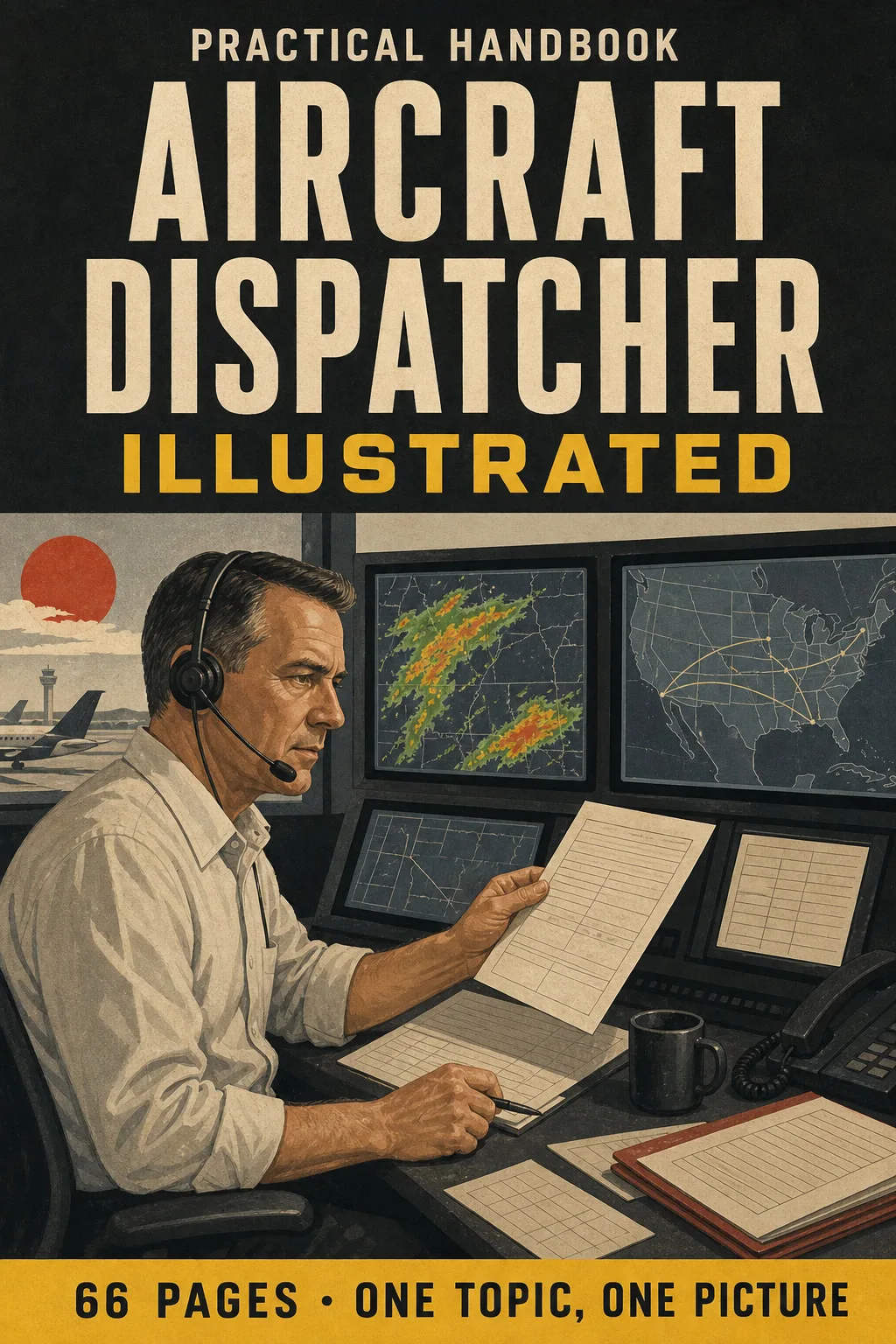
Aircraft Dispatch and the ADX, Illustrated Seven Steps, Always in Order

METARs and TAFs, Part 121 fuel, weight and balance, %MAC, takeoff and landing performance, alternates, the MEL and the dispatch release. Every topic gets its own page: the drawing first, then what you need to remember. 66 illustrated pages.

START STUDYING THIS WAY

🔒 Secure checkout · PDF by email · 30-day guarantee

Every topic, its own pageEach rule drawn, with the explanation right beside it
66 illustrated pages9 parts, from operational control to the numbers to have at hand
Up-to-date sources14 CFR Parts 65 and 121, the Aircraft Dispatcher ACS and the FAA Aviation Weather Handbook
PDF by emailFormat

Look Inside the Book

Every page has one big drawing and a box with the numbers and rules you need to know:

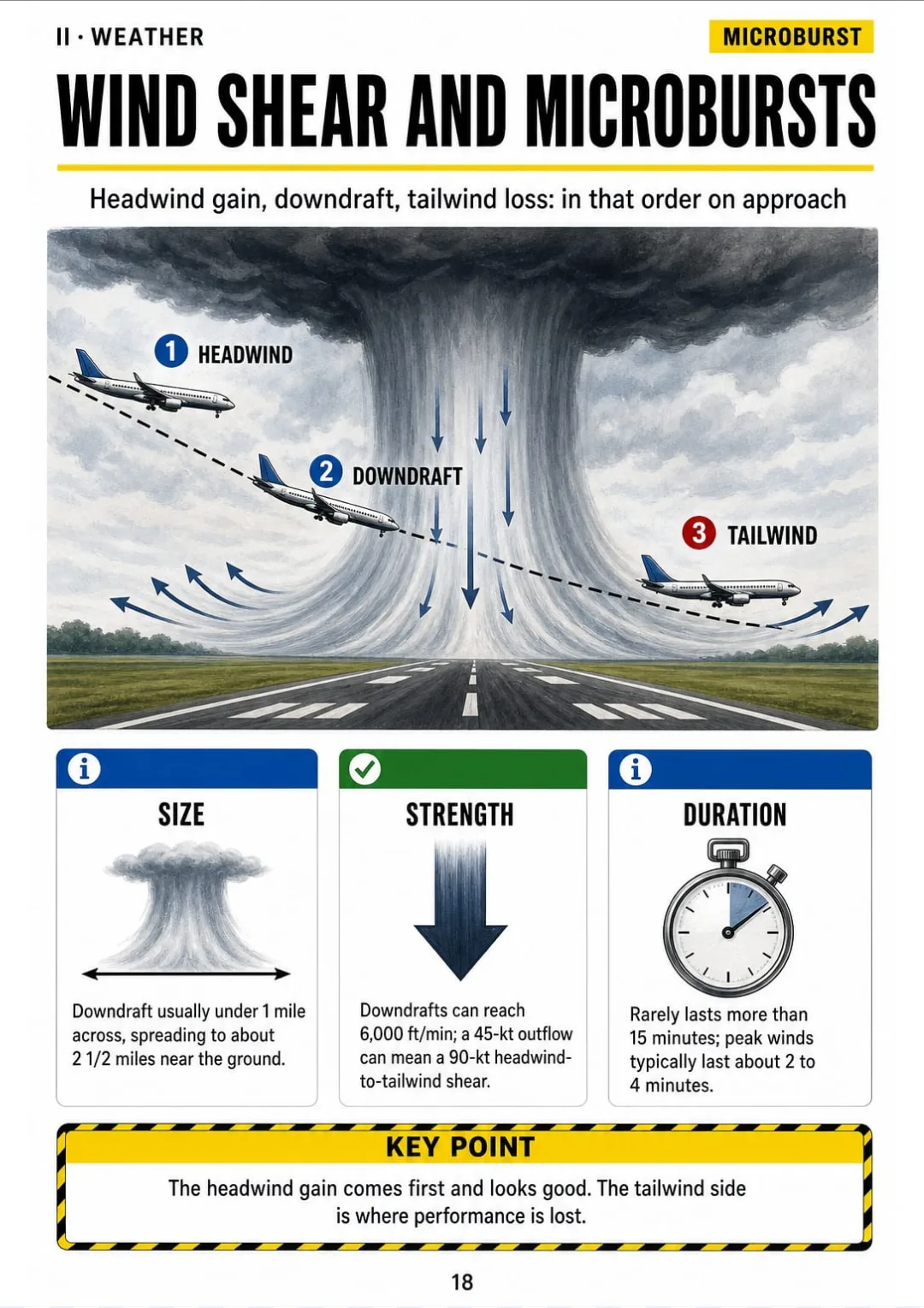
Microburst cross-section: headwind, downdraft, tailwind. Downdrafts up to 6,000 ft/min; rarely lasts over 15 minutes.
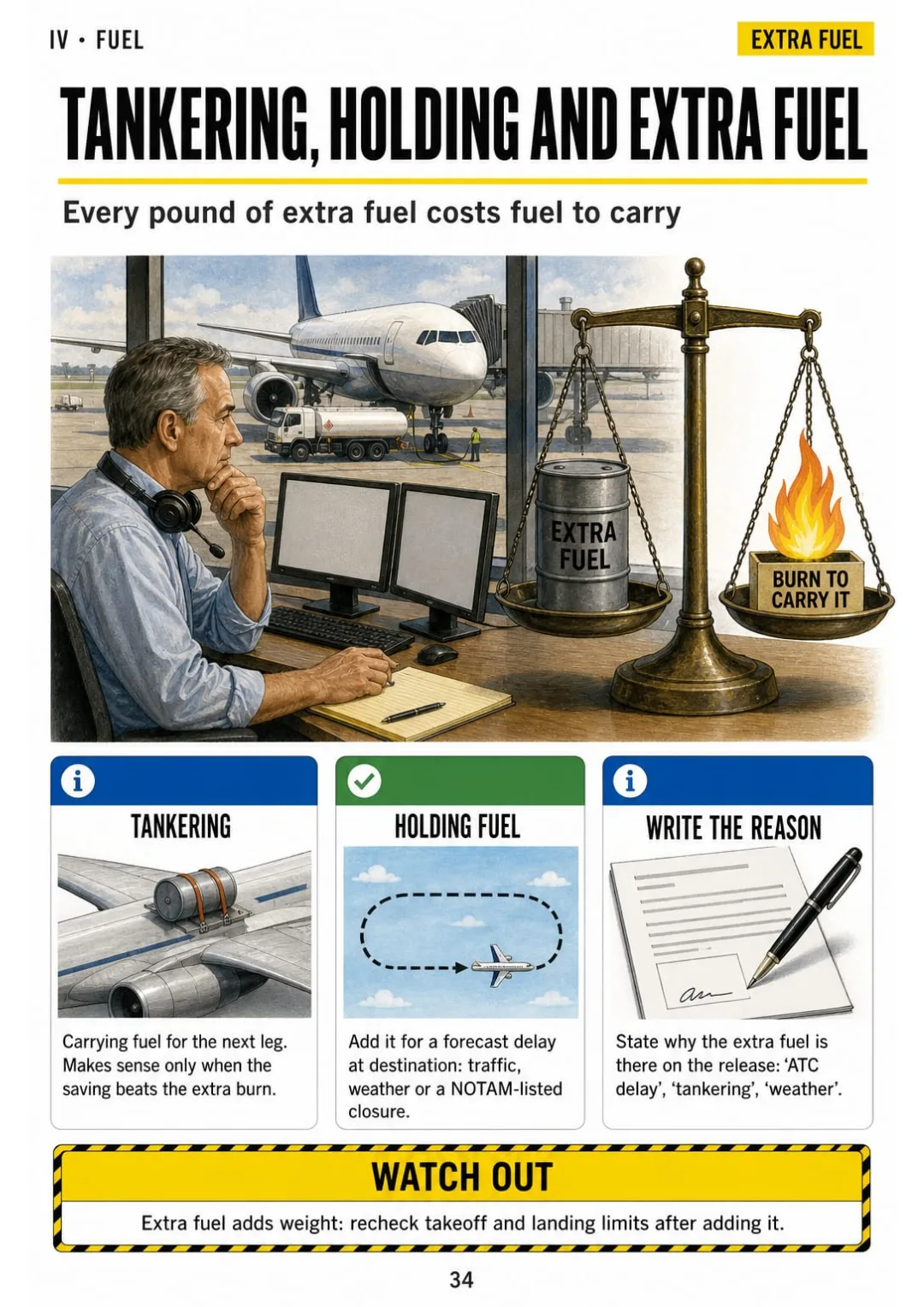
Tankering vs holding fuel: when extra fuel pays, and how to write it on the release.
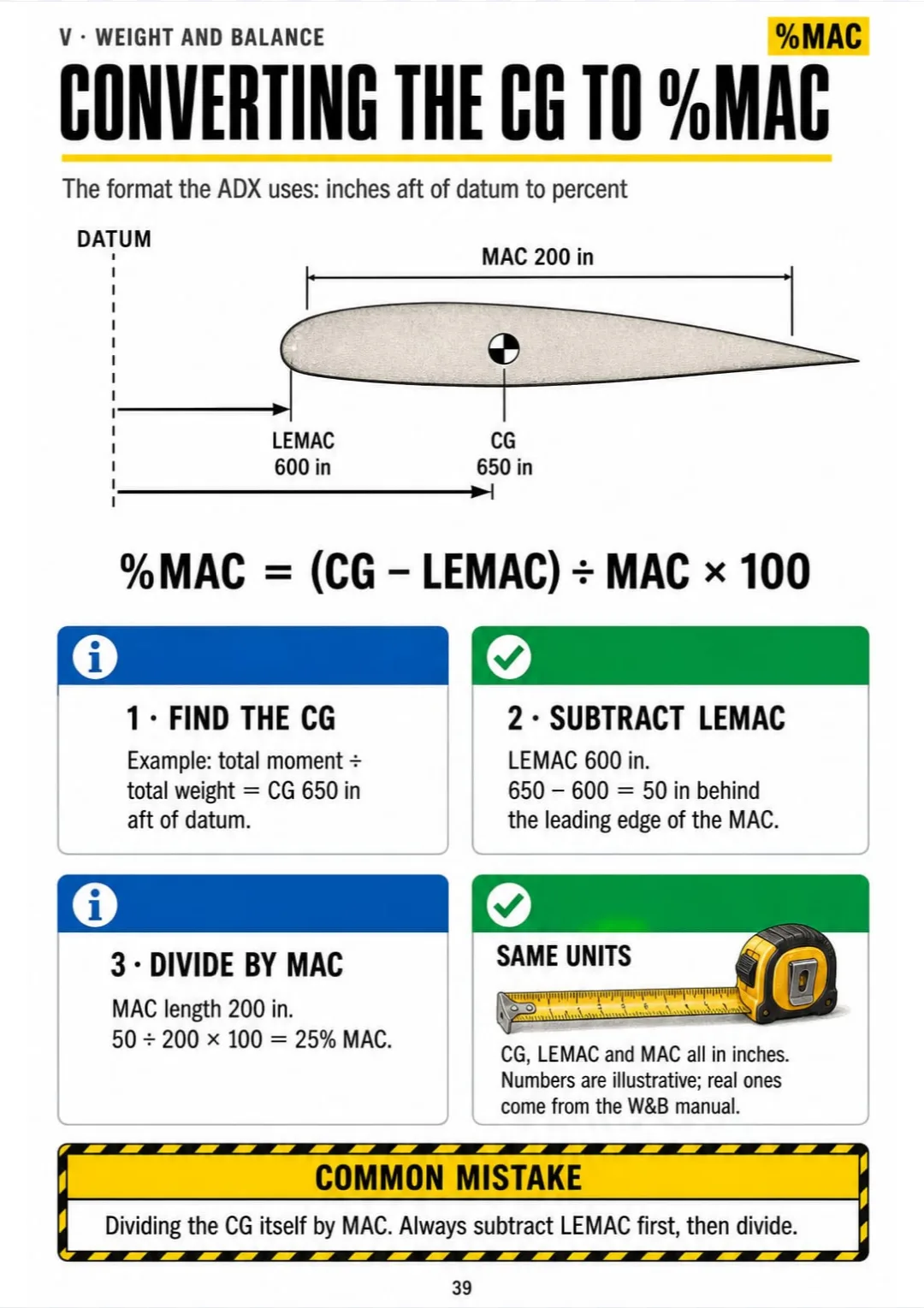
%MAC = (CG − LEMAC) ÷ MAC × 100, worked in three steps
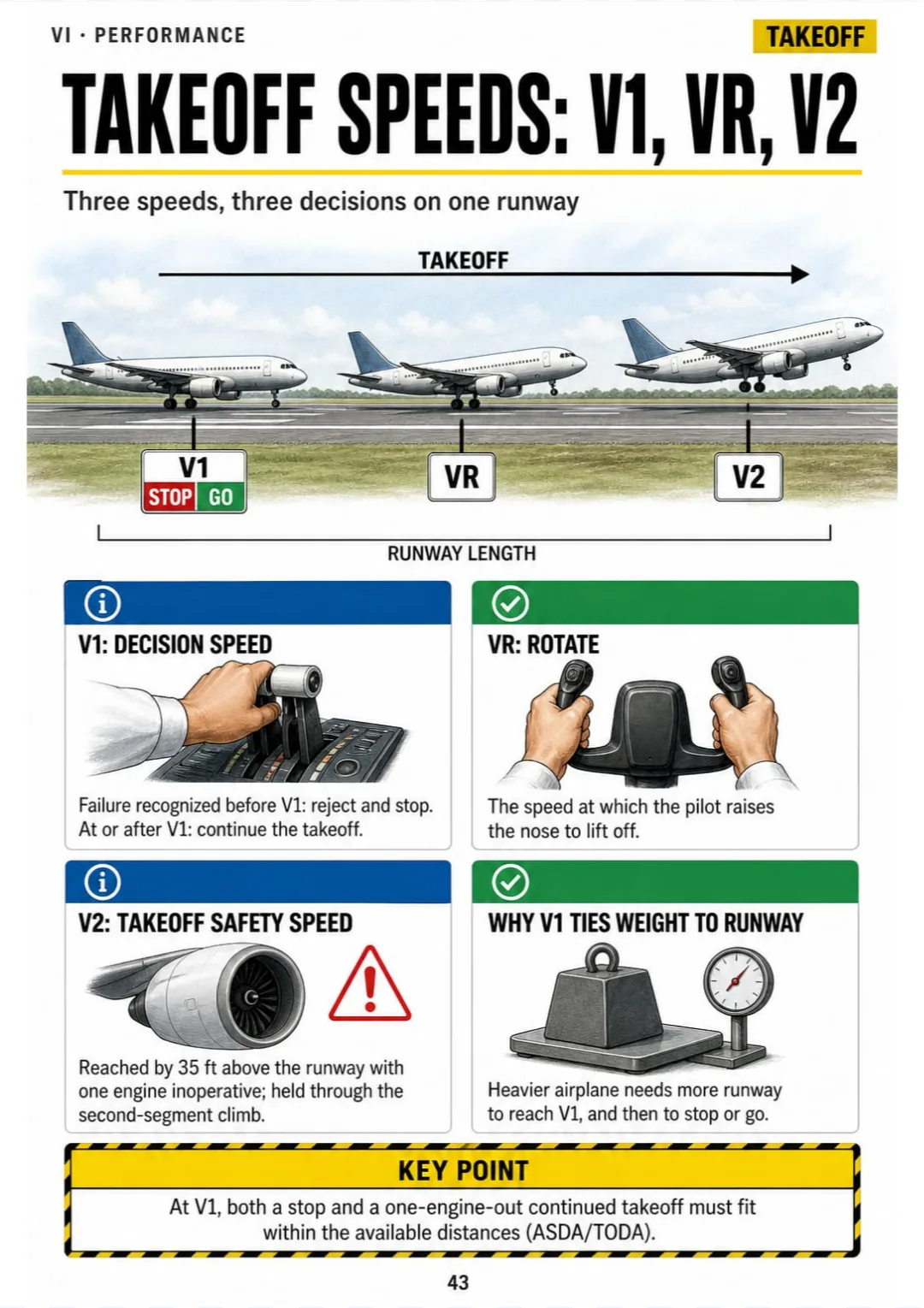
V1 decide, VR rotate, V2 climb with one engine out: one runway, three speeds.
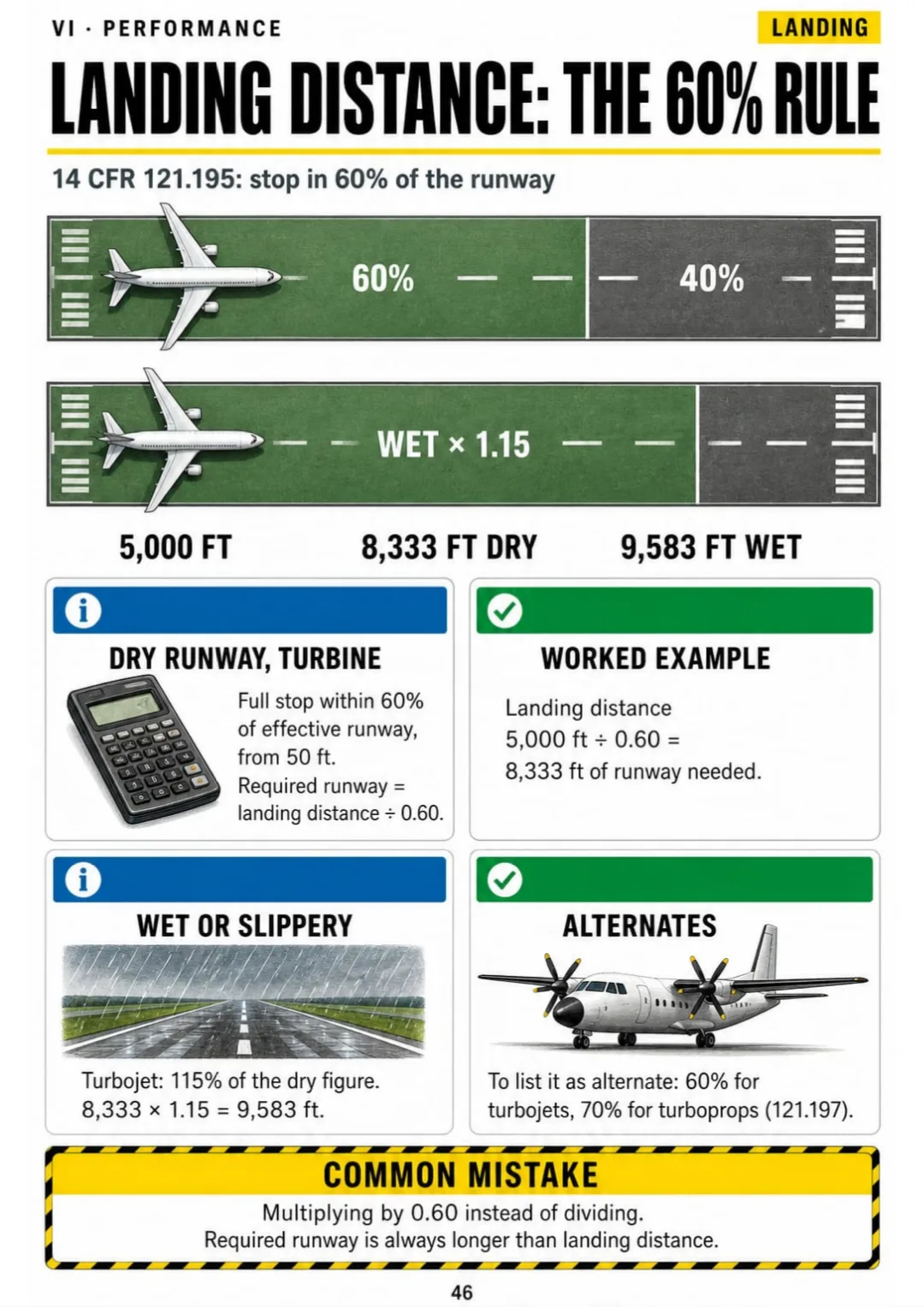
121.195: 5,000 ft landing distance needs 8,333 ft dry and 9,583 ft wet.
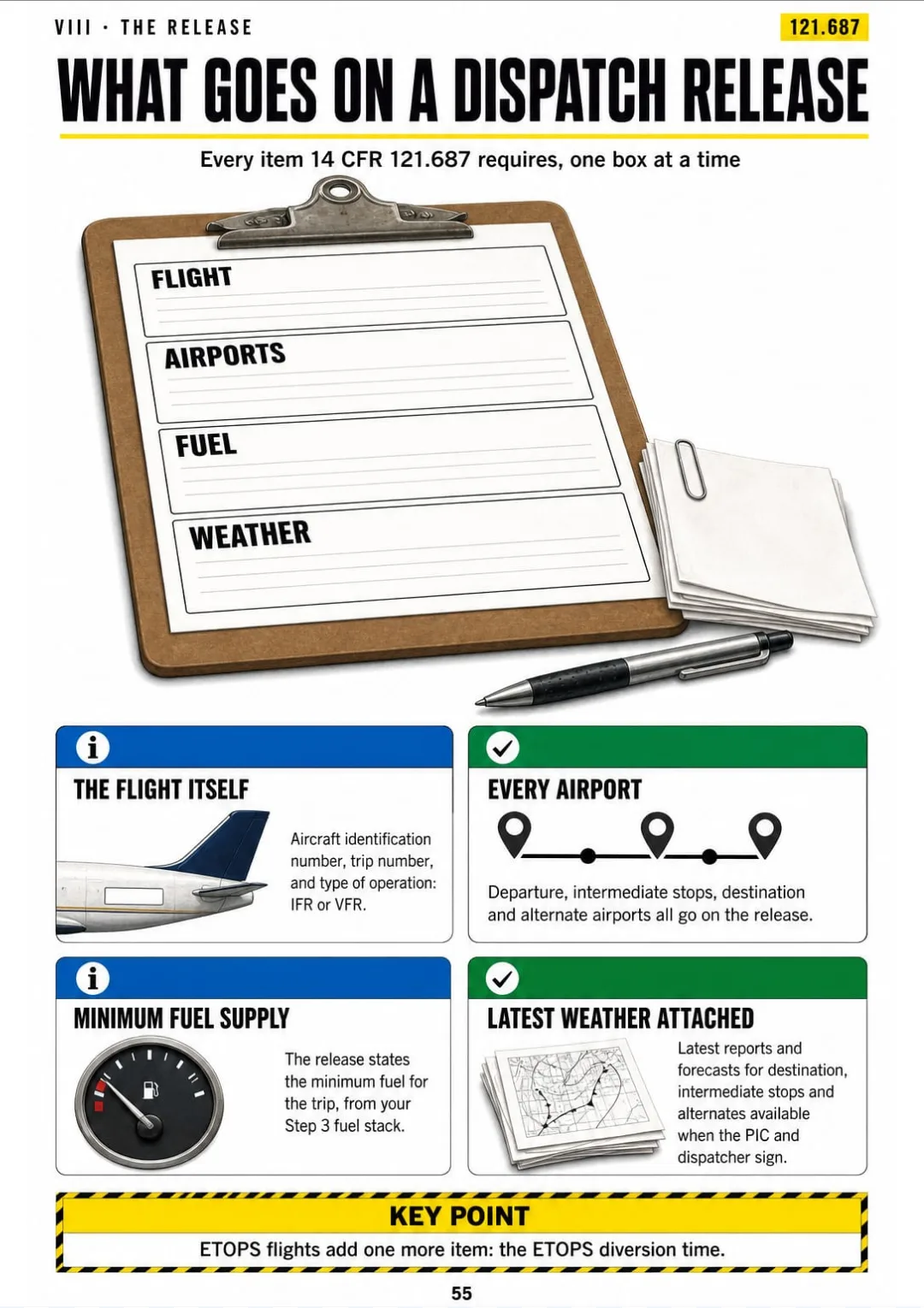
121.687: aircraft ID, trip number, airports, IFR/VFR, minimum fuel and attached weather
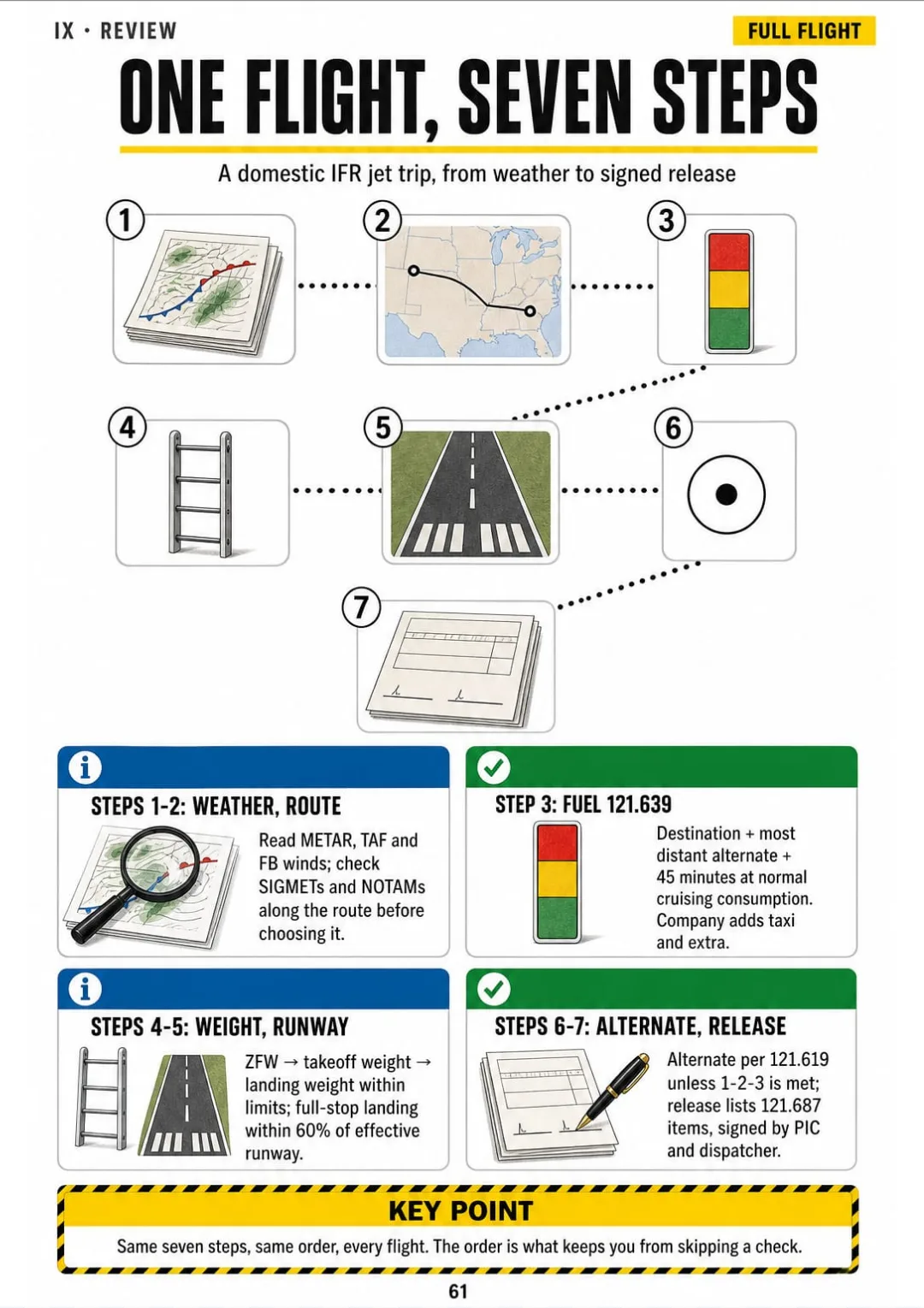
Weather → route → fuel → weight → runway → alternate → release: one flight, one page.
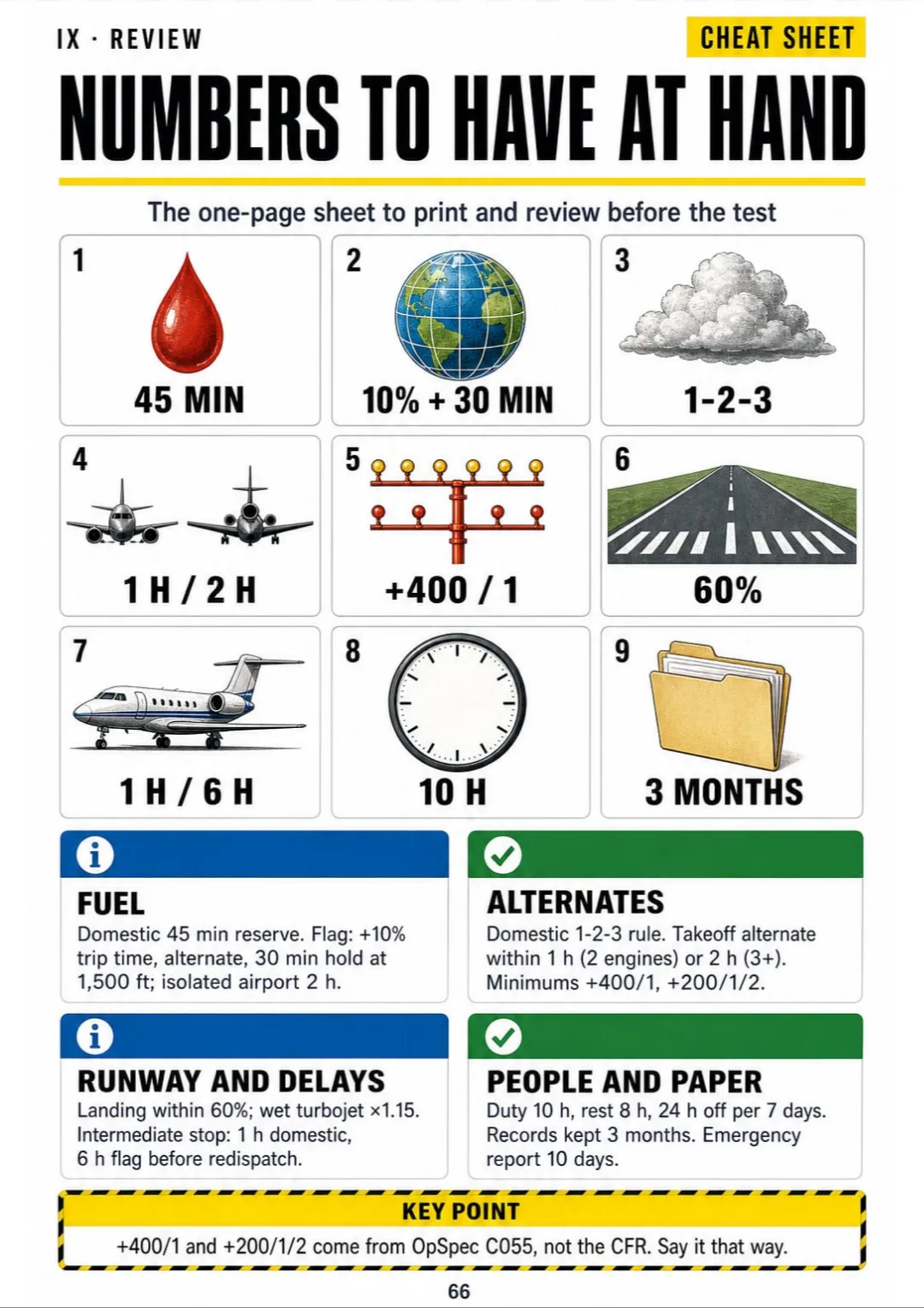
45 min, 10% + 30, 1-2-3, 1 h/2 h, 60%, 1 h/6 h, 10 h, 3 months.

Swipe to see more →

These are real pages from the book. The table of contents is the full one: 9 parts and 62 topics.

The Problem Isn't You. It's How It Was Explained to You.

You're working a load problem. You have the CG in inches from the datum, and the question wants it in percent of MAC.

The manual covers it in one long paragraph: datum, arm, leading edge, mean aerodynamic chord, all in the same sentence. So you end up guessing what to subtract from what.

%MAC = (CG − LEMAC) ÷ MAC × 100, worked in three steps

In this book, %MAC is one page. The MAC is drawn along the wing, LEMAC marked at its front edge, the CG in between, and the formula worked in three boxed steps: subtract, divide, multiply by 100.

The other heavy topics work the same way: the TAF on a timeline, the fuel load as a stacked bar, the 60% landing rule, alternate minimums and the dispatch release, each on its own page.

Next load problem, you work it out without going back to the manual, and you can say each step out loud.

COMPARE FOR YOURSELF

The Same Topic, Two Ways to Study It

THIS
  • The manual: line after line
  • Fuel rules explained only in words
  • You walk into the test still unsure
Under 14 CFR 121.639, no person may dispatch an airplane in domestic operations unless it has enough fuel to fly to the airport to which it is dispatched, then to the most distant alternate where one is required, and thereafter for 45 minutes at normal cruising fuel consumption. For flag operations, 121.645 replaces the 45 minutes with 10 percent of the total flight time plus 30 minutes of holding at 1,500 feet above the alternate, so the same trip may require a different total.
FOR THIS
  • Domestic and flag fuel in one drawing
  • The numbers in a box
  • You see it, and it clicks
Tankering vs holding fuel: when extra fuel pays, and how to write it on the release.
CONTENTS

Take a Look at the 9 Parts and 62 Topics

The job and the method, weather, route and airspace, fuel, weight and balance, performance, alternates and MEL, the release and flight following, and review with oral prep: 66 pages, all illustrated.

IThe Job, the Test and the Method · pp. 5-10
  1. What a Dispatcher Actually Does: Operational Control
  2. Part 65 Subpart C: Who Can Get the Certificate
  3. The ADX Knowledge Test and the Practical Test
  4. The 7-Step Dispatch Method
  5. US Units and Abbreviations You Will Use Every Day
  6. Domestic, Flag and Supplemental: Which Rules Apply
IIStep 1: Weather · pp. 11-22
  1. Reading a METAR Left to Right
  2. Ceiling: Which Layer Counts
  3. Weather and Obscuration Codes
  4. The TAF on a Timeline
  5. Winds and Temperatures Aloft (FB)
  6. Air Masses and Fronts
  7. Thunderstorms: Three Stages and What They Do to a Flight
  8. Wind Shear and Microbursts
  9. Icing: Rime, Clear and Mixed
  10. Turbulence and the Jet Stream
  11. SIGMET, Convective SIGMET, AIRMET and PIREP
  12. Charts and the GFA: Building the Weather Picture
IIIStep 2: Route, Airspace and ATC · pp. 23-28
  1. Pressure Altitude, Density Altitude and the Altimeter
  2. US Airspace for the Dispatcher
  3. Jet Routes, Q-Routes and Preferred Routes
  4. Great Circle, Wind and the Best Route
  5. NOTAMs and TFRs That Can Stop a Release
  6. The ICAO Flight Plan Fields
IVStep 3: Fuel · pp. 29-35
  1. The Fuel Load as a Stacked Bar
  2. Domestic Fuel: 14 CFR 121.639
  3. Flag Fuel: 14 CFR 121.645
  4. Worked Example: Domestic vs Flag on the Same Trip
  5. Fuel Burn, Winds and Step Climbs
  6. Tankering, Holding and Extra Fuel
  7. Minimum Fuel vs Emergency Fuel
VStep 4: Weight and Balance · pp. 36-42
  1. The Weight Ladder: BEW to Landing Weight
  2. The Three Structural Limits: MZFW, MTOW, MLW
  3. The CG on a Balance Beam
  4. Converting the CG to %MAC
  5. Shifting Weight: Moving Cargo or Passengers
  6. Adding or Removing Weight
  7. The Load Sheet and the CG Envelope
VIStep 5: Performance · pp. 43-47
  1. Takeoff Speeds: V1, VR, V2
  2. Runway-Limited Takeoff Weight
  3. Climb and Obstacle Limits
  4. Landing Distance: The 60% Rule
  5. Wind Components: Headwind, Crosswind, Tailwind
VIIStep 6: Alternates and MEL · pp. 48-54
  1. When a Destination Alternate Is Required (Domestic)
  2. The Second Alternate
  3. Takeoff Alternate: The 1-Hour and 2-Hour Rule
  4. Alternate Minimums: +400 and 1, +200 and 1/2
  5. Choosing an Alternate You Can Defend Out Loud
  6. The MEL: Flying With Something Broken
  7. The CDL and Deferred Items on the Release
VIIIStep 7: The Release and Flight Following · pp. 55-60
  1. What Goes on a Dispatch Release
  2. Who Signs and How Long It Is Kept
  3. Delays and Redispatch
  4. Flight Following: Watching the Flight After Takeoff
  5. Emergency Authority and Reporting
  6. Dispatcher Duty Time and Recency
IXReview and Oral Prep · pp. 61-66
  1. One Flight Dispatched in 7 Steps
  2. How to Answer the Examiner Out Loud
  3. Frequent Weather Decoding Mistakes
  4. Frequent Fuel and Weight Mistakes
  5. Frequent Alternate and MEL Mistakes
  6. Numbers to Have at Hand

One Page, One Topic, All Clear

Think of it this way:

You're in the practical test. The examiner hands you a forecast and asks whether this flight needs an alternate, and which one you'd pick and why.

In the book you open the alternates page and see the TAF on a timeline, the one-hour window around arrival marked, and the 1-2-3 rule in a box.

121.195: 5,000 ft landing distance needs 8,333 ft dry and 9,583 ft wet.

Same with domestic and flag fuel, %MAC, V1-VR-V2, the 60% landing rule and the dispatch release: each one on its own page.

Aircraft Dispatcher Illustrated is 9 parts and 66 illustrated pages, one topic per page, and it ends with one flight dispatched in 7 steps, the most frequent mistakes and the numbers to have at hand.

What you see drawn, you don't have to memorize.

What's Inside Aircraft Dispatcher Illustrated:

Ipp. 5-10

The Job, the Test and the Method

What operational control means, who can get the certificate under Part 65, the ADX and the practical test, the 7-step method, units and abbreviations, and domestic vs flag vs supplemental.

IIpp. 11-22

Step 1: Weather

METARs left to right, ceilings, weather codes, the TAF on a timeline, winds aloft, fronts, thunderstorms, wind shear, icing, turbulence, SIGMETs and AIRMETs, and the GFA.

IIIpp. 23-28

Step 2: Route, Airspace and ATC

Pressure and density altitude, US airspace, jet routes and Q-routes, great circle and winds, NOTAMs and TFRs, and the ICAO flight plan fields.

IVpp. 29-35

Step 3: Fuel

Fuel: you'll see why the same trip can need a different total. The fuel load as a stacked bar, domestic fuel under 121.639, flag fuel under 121.645, the same trip worked both ways, burn and step climbs, tankering, and minimum vs emergency fuel.

Vpp. 36-42

Step 4: Weight and Balance

The weight ladder from BEW to landing weight, MZFW, MTOW and MLW, the CG on a balance beam, %MAC, shifting and adding weight, and the load sheet.

VIpp. 43-47

Step 5: Performance

V1, VR and V2, runway-limited takeoff weight, climb and obstacle limits, the 60% landing rule and wind components.

VIIpp. 48-54

Step 6: Alternates and MEL

When you need a destination alternate, the second alternate, takeoff alternates, alternate minimums, how to defend your choice, and the MEL and CDL on the release.

VIIIpp. 55-60

Step 7: The Release and Flight Following

What goes on the dispatch release, who signs it and how long it's kept, delays and redispatch, flight following, emergency authority and duty time.

IXpp. 61-66

Review and Oral Prep

One full flight in 7 steps, how to answer the examiner out loud, the most frequent weather, fuel, weight and alternate mistakes, and the numbers to have at hand.

At the end of the book: One full flight dispatched in 7 steps, the most frequent mistakes and the numbers to have at hand.
Plus: 2 Free Books

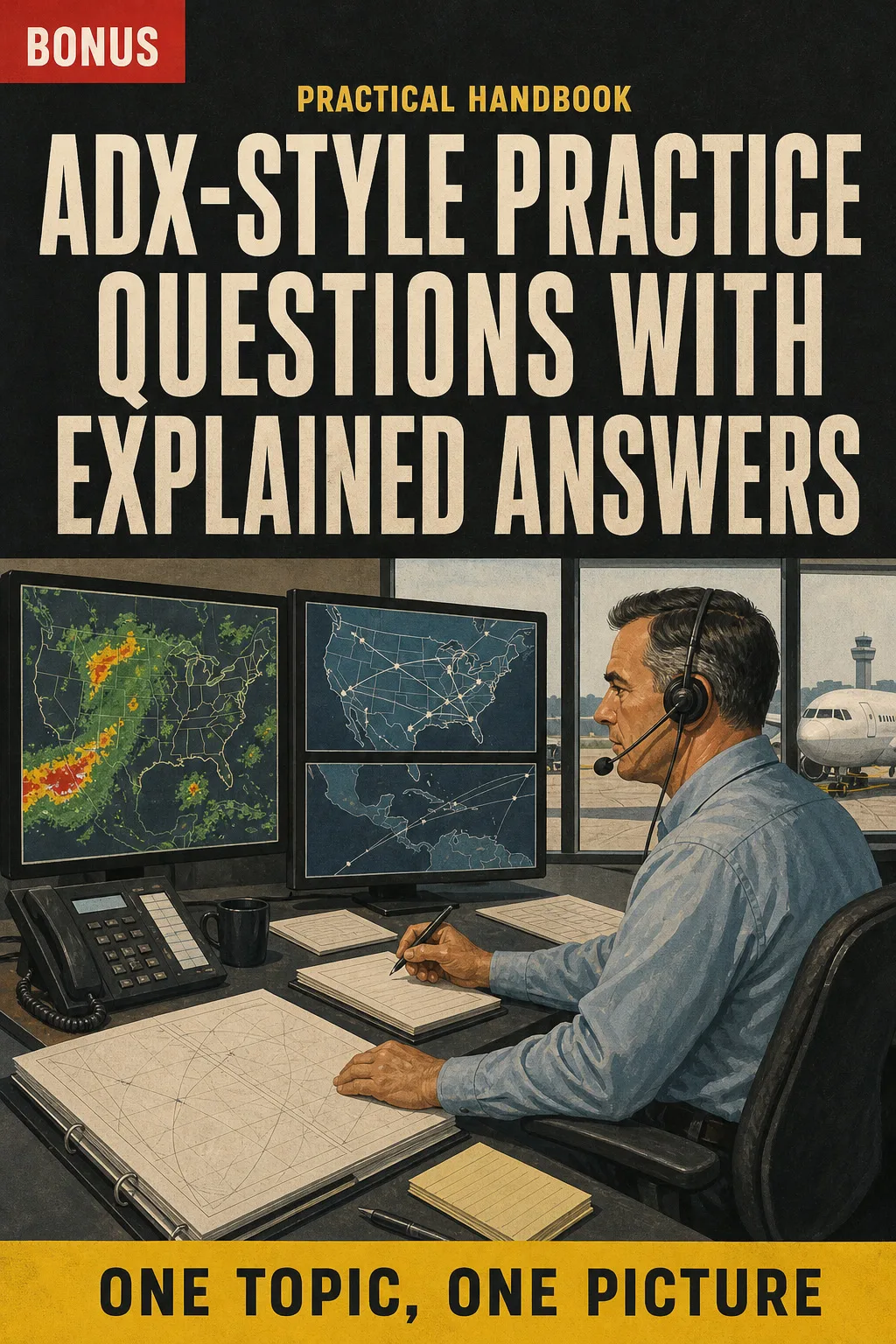
ADX-Style Practice Questions with Explained Answers

BONUS 1: «ADX-Style Practice Questions with Explained Answers»

Value on its own: US$ 17.90

Test yourself topic by topic and see why each answer is right, with the page of the book that explains it.

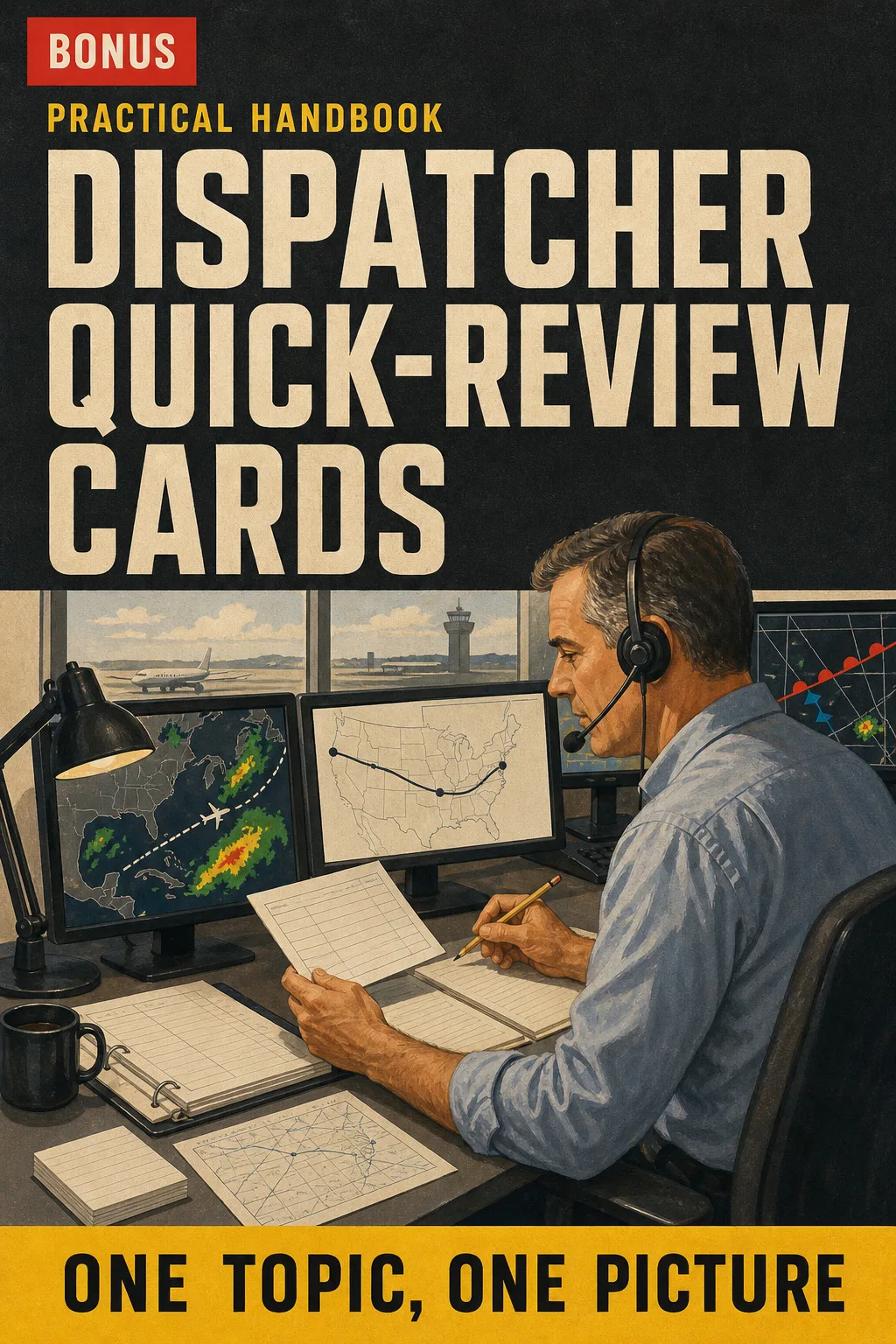
Dispatcher Quick-Review Cards

BONUS 2: «Dispatcher Quick-Review Cards»

Value on its own: US$ 14.90

Fuel rules, alternate minimums, METAR codes and release items on printable cards to review in minutes before the test.

Aircraft Dispatcher Illustrated with 2 Free Books

  • Aircraft Dispatcher Illustrated: 66 illustrated pagesUS$ 63
  • BONUS 1: ADX-Style Practice Questions with Explained AnswersUS$ 17.90
  • BONUS 2: Dispatcher Quick-Review CardsUS$ 14.90
  • High-resolution PDF to printIncluded
Total value US$ 95.80
YOUR PRICE:
US$ 27
You save US$ 68.80
YES, I WANT AIRCRAFT DISPATCHER ILLUSTRATED FOR US$ 27

📄 This is a digital PDF book sent to your email: nothing is printed or shipped.

Secure purchaseEncrypted payment30-day guarantee

PDF by email: We email you Aircraft Dispatcher Illustrated as a PDF, together with the two free books. It's a single payment: no installments, no extra charges.

Who This Book Is For

You're in the dispatcher course

You're in the dispatcher course

Each class topic has its own page, so what you covered today still makes sense next week.

Your ADX or oral is coming up

Your ADX or oral is coming up

You review the 7 steps in the same order and practice saying each decision out loud, the way the examiner asks for it.

You're starting at the dispatch desk

You're starting at the dispatch desk

Fuel rules, %MAC, alternates and the release on paper, to review alongside your airline's training and manuals during your first weeks.

Everything You Get Today

US$ 95.80US$ 27
YES, I WANT AIRCRAFT DISPATCHER ILLUSTRATED FOR US$ 27

📄 This is a digital PDF book sent to your email: nothing is printed or shipped.

30DAYS
GUARANTEE

30-Day Guarantee

Try Aircraft Dispatcher Illustrated for 30 days, bonus books included.

We refund everything if the file won't open, if the book isn't what you see here, if you were charged twice or if the email doesn't arrive. Just email us.

You pay once. No subscriptions.

Frequently Asked Questions

I already have the question bank and the FAA handbooks. What does this add?

The bank gives you the answer. The handbooks give you the text. This book gives you the why, drawn: fuel as a stacked bar, the CG on a balance beam, the TAF on a timeline, the 1-2-3 rule in a box. And one flight dispatched in 7 steps, so you can explain each decision out loud at the oral. If you come from ops or the cockpit, you'll see what you know the way the ADX asks for it.

Where does the content come from?

From 14 CFR Part 65 Subpart C and Part 121, the current Aircraft Dispatcher ACS, the FAA Aviation Weather Handbook (FAA-H-8083-28) and the AIM. Each rule was checked against the eCFR edition in force when the book was prepared, and each page names the section it comes from, so you can check it yourself.

Is this official FAA material?

No. It's an independent study book. It isn't published, approved or endorsed by the FAA.

Does it replace the approved dispatcher course?

No. To get the certificate you need either an FAA-approved Part 65 course or the qualifying experience in 14 CFR 65.57, and on the job your airline's procedures. This book goes alongside, for studying and review.

Are the practice questions the real ADX questions?

No. They're written for this book in the style of the test, each with the explanation and the page that covers the topic.

How do I get it?

The book and the 2 bonus books come as a PDF by email, to the address you enter at checkout.

Do I have to pay every month?

No. It's a one-time payment.

Can I have it on paper?

Yes. The PDF is printable: print the whole book or just the pages you want to bring to class.

How does the refund work?

You have 30 days. We refund everything if the file won't open, if the book isn't what you see on this page, if you were charged twice or if the email doesn't arrive: just email us.

Before You Close This Page

No more rereading Part 121 with nothing sticking.

Fuel, %MAC and alternates: you see them drawn, and you've got them.

You walk into the test knowing where everything is.

Drawings make studying faster.

The book is right below.

One-time payment: US$ 27 · Guarantee: 30 days · PDF by email

YES, I WANT AIRCRAFT DISPATCHER ILLUSTRATED FOR US$ 27

📄 This is a digital PDF book sent to your email: nothing is printed or shipped.